Why Does Facebook Ask for Phone Verification?
Phone verification is one of the ways online platforms can confirm that a person has access to a particular mobile number.
Facebook may request a phone number during registration, account security checks or other situations where additional verification is required. The exact process can change depending on the account, device, location and Facebook's current security systems.
For Nigerian users creating or managing Facebook accounts, understanding this process is useful because an SMS verification request can appear even when the initial registration experience does not make the requirement obvious.
Explore Facebook Verification Numbers on Signival
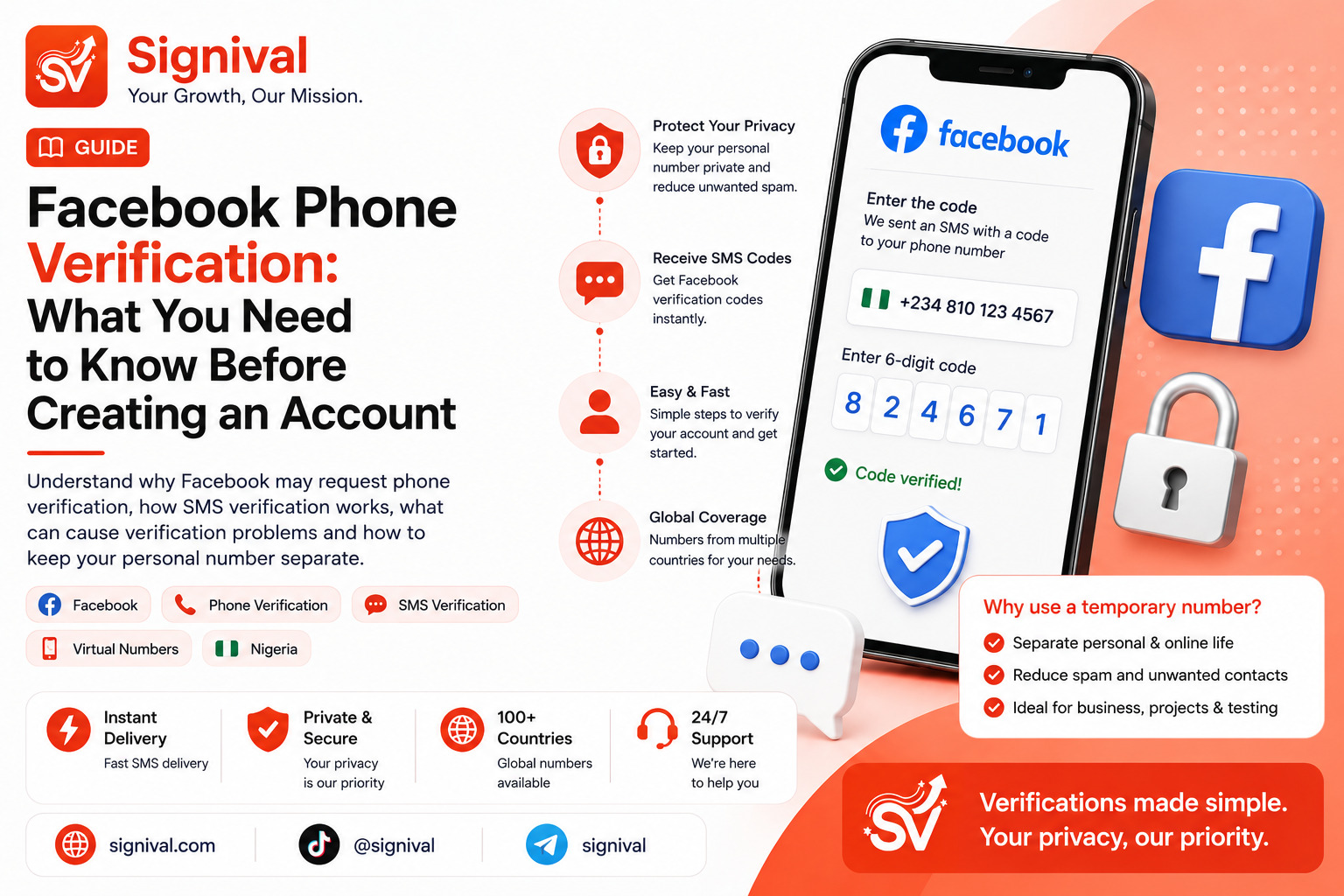
How Facebook SMS Verification Works
The basic process is simple.
Facebook presents a phone-number verification step and asks you to enter a number. It then sends an SMS containing a verification code to that number if SMS verification is available for the account.
You enter the received code into Facebook's verification screen. If the code is valid and the verification is accepted, the phone-number confirmation step is completed.
The difficulty is usually not the code itself. Problems tend to occur when the SMS does not arrive, the number is not accepted, the code expires or Facebook requests another form of verification.
Why Facebook May Require a Phone Number
Large social platforms deal with enormous numbers of automated registrations, spam accounts and account-abuse attempts. Additional verification helps platforms distinguish legitimate account activity from suspicious activity.
Phone verification can also provide an additional account-security mechanism.
This does not mean that every account will require the same verification process. Facebook's systems can make different verification decisions depending on its assessment of the account and the circumstances surrounding registration.
Do You Have to Use Your Personal Phone Number?
If Facebook provides another acceptable registration or verification method, you may be able to use it instead. However, there is no guarantee that Facebook will always allow registration without a phone number.
If Facebook specifically requires SMS verification and you do not want to expose your primary personal number, you may consider a separate number for the verification event.
A temporary virtual number can be useful for this purpose when Facebook accepts the number and the provider can successfully receive the verification SMS.
Using a Temporary Number for Facebook Verification
A temporary number provides a separate line for an SMS verification event without requiring you to use your everyday personal number.
On Signival, users can fund their Naira wallet, select a supported SMS service and request an available number. The number is displayed in the dashboard, and any successfully delivered verification SMS appears there for the duration of the activation.
The process is designed around receiving the verification message rather than maintaining a conventional mobile line.
View the Facebook verification service
Step-by-Step Facebook SMS Verification
Step 1 — Start the Facebook registration process: Follow Facebook's normal account creation process.
Step 2 — Check the verification requirement: If Facebook requests a phone number and SMS verification, determine which number you want to use.
Step 3 — Request a supported number: If you are using Signival, select Facebook from the available services and choose an available country and number.
Step 4 — Enter the number: Copy the assigned number into Facebook's verification field.
Step 5 — Wait for the SMS: If Facebook successfully sends the message, the code appears in the Signival dashboard.
Step 6 — Enter the code: Submit the verification code to Facebook and follow any remaining account-setup instructions.
Successful delivery depends on current provider inventory and Facebook's acceptance of the number.
What If the Facebook Verification Code Does Not Arrive?
There are several possible reasons an SMS may fail to arrive.
Carrier delivery delays: SMS messages can occasionally take longer to reach a number because of carrier or gateway congestion.
Provider availability: A number may be technically available but have limited delivery compatibility with the requested platform.
Platform restrictions: Facebook may reject certain numbers or number types based on its own verification systems.
Repeated requests: Requesting multiple codes quickly can sometimes complicate the verification process. Follow the instructions presented by Facebook rather than repeatedly triggering new requests.
Expired activation: Temporary verification sessions have a limited active period. If the session expires before delivery, the activation ends according to the service's rules.
Can You Use a Nigerian Number for Facebook Verification?
A Nigerian mobile number can be used where Facebook accepts the number and provides Nigerian SMS verification for the account.
However, users sometimes need a number from another country for legitimate reasons, such as managing an international project or setting up an account associated with a particular market.
Signival's available inventory varies by service and country. You should always check the countries currently available in the dashboard before starting an activation.
Don't Assume a Virtual Number Will Always Work
This is an important distinction when using any SMS verification service.
A virtual number being available does not mean Facebook will necessarily accept it. Platforms make their own decisions about which numbers and number types they allow for verification.
Delivery also depends on the upstream provider and carrier network.
For this reason, a responsible verification service should never promise that every number will work for every Facebook account.
Protecting Your Facebook Account After Verification
Completing phone verification is only one part of securing an account.
If you intend to keep the Facebook account long term, review the security and recovery options available inside Facebook.
Do not share your password or verification codes with other people. Treat OTP codes as sensitive authentication information. Anyone who obtains a valid authentication code may potentially use it to complete a security action that you did not authorize.
Also make sure you understand how you will recover the account if you lose access to the original verification method.
Temporary Verification vs Permanent Account Recovery
These are two different things.
A temporary number can be useful for receiving an SMS during a registration or verification event. A permanent recovery method is intended to help you regain access to an account in the future.
If an account is valuable, do not build your entire recovery strategy around a temporary number that you may not have access to later.
After completing registration, review the account's available security options and maintain recovery information you can reliably access.
Facebook Verification for Business Users
Businesses and agencies may have additional reasons to separate account-registration information from personal contact details.
A Facebook page or business account may be operated by a team rather than a single individual. Using a founder's personal number as the only contact method can create unnecessary dependency on that person's private information.
Where Facebook's account structure permits it, businesses should maintain appropriate business contact and account-management arrangements rather than relying entirely on one individual's personal details.